Core Fear
Becoming the kind of heir who protects the comfort and forgets the purpose.
The door was open before he arrived. That did not make the room his.
Julian Raines was born into the kind of literary gravity most writers spend their lives trying to reach: old names, old rooms, old presses, old trust. His books were good. His access was better. The problem was not that he inherited power.
The problem was deciding what power owed once it stopped pretending it had arrived alone.

A vertical introduction to Julian in his element: brass lamps, family ledgers, quiet rooms, a manuscript beside an inherited key, and a man who knows ease is not innocence.
Becoming the kind of heir who protects the comfort and forgets the purpose.
Legacy is not ownership. A name can open doors, but it can also become a debt.
Family records. Closed rooms. Who gets invited. Who gets delayed. Where stewardship becomes possession.
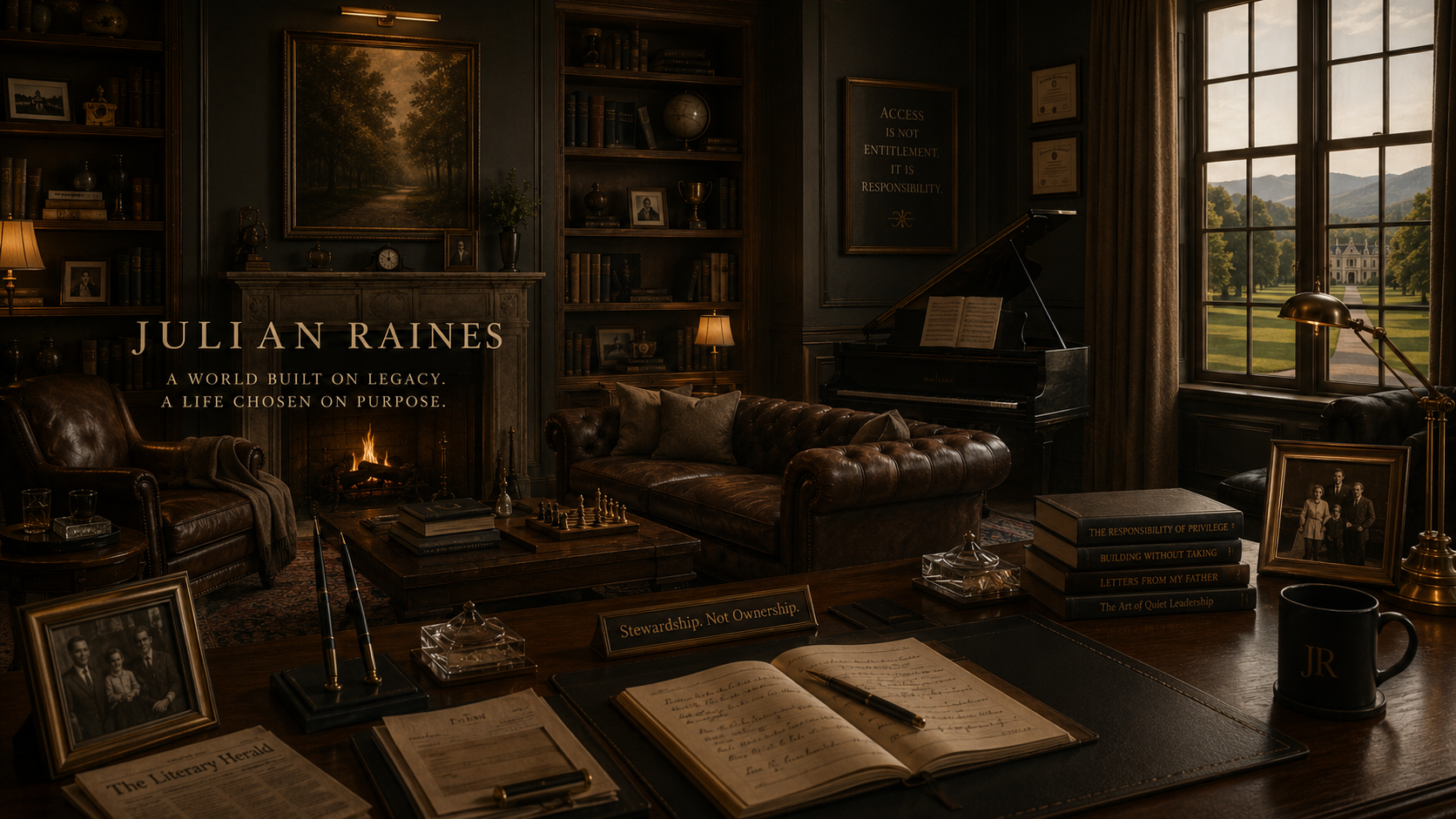
“He had never mistaken an open door for proof that he had earned the room.”Access Fragment
“Everything was handed to him except the question of what he owed.”Legacy Fragment
“The page remained marked.”Archive Fragment
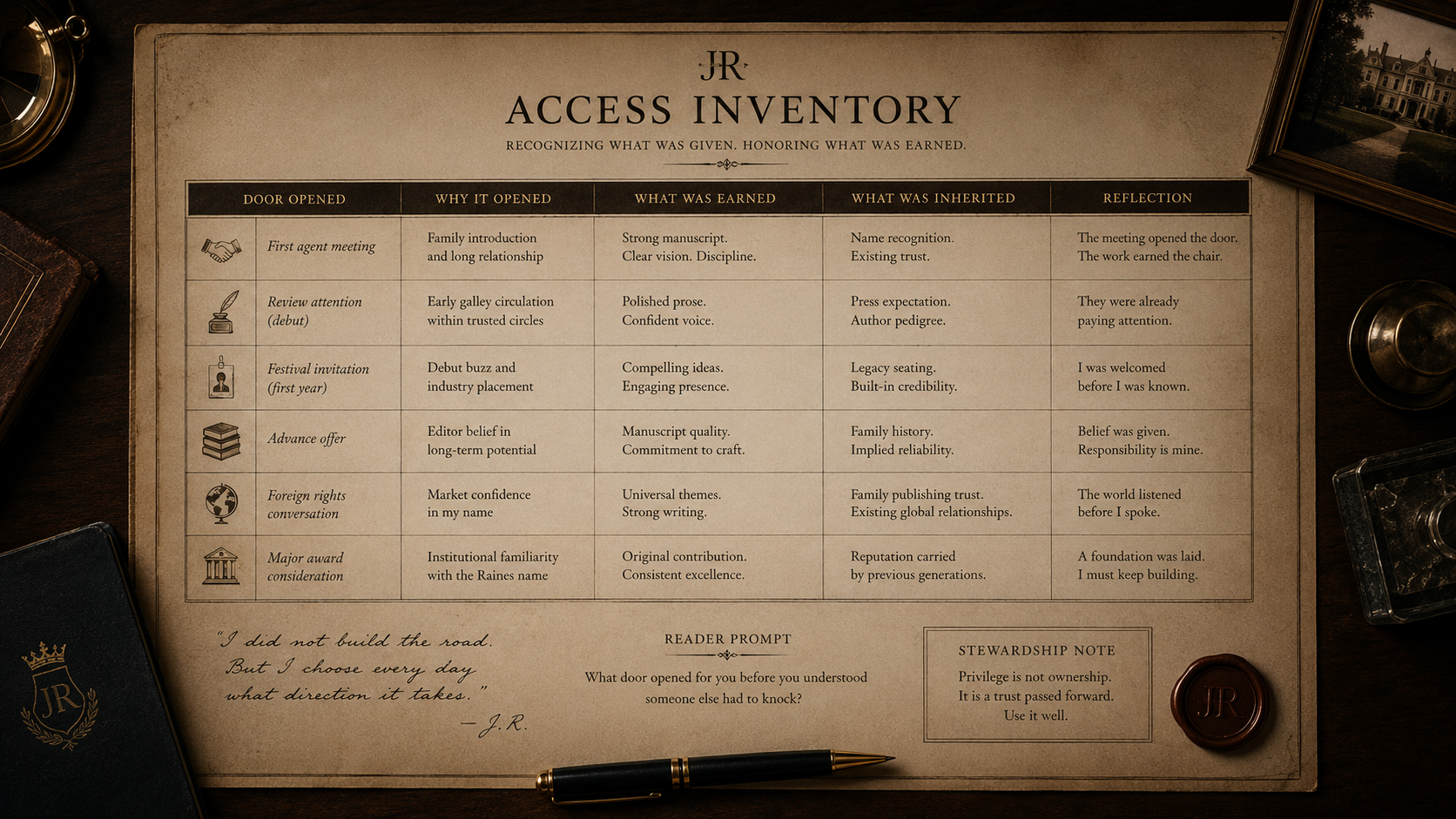
| Door Opened | Earned | Inherited |
|---|---|---|
| First agent meeting | Strong manuscript | Family introduction |
| Review attention | Polished prose | Press expectation |
| Festival invite | Audience interest | Legacy seating |
| Foreign rights conversation | Book quality | Family publishing trust |
Born for literature.
He disliked that phrase, not because it was wholly false, but because it made preparation sound like destiny. It erased the doors. It erased the hands on the handles.
It also erased the work, which was inconvenient, because the work was the one part he knew had been his.
| Generation | Built | Intended Purpose | Later Distortion |
|---|---|---|---|
| First Printer | Regional press | Local access to books | Market capture |
| Distributor | Rail-linked circulation | Movement of ideas | Control of availability |
| Publisher-Founder | Literary house | Risk on voices | Prestige hoarding |
| Family Board Era | Capital network | Stability | Dominance |
Everett and Spencer believed the family name was proof of authority. Julian believed it was a question still waiting to be answered correctly.
They understood wealth as control. He understood it, at its best, as protection with restraint.
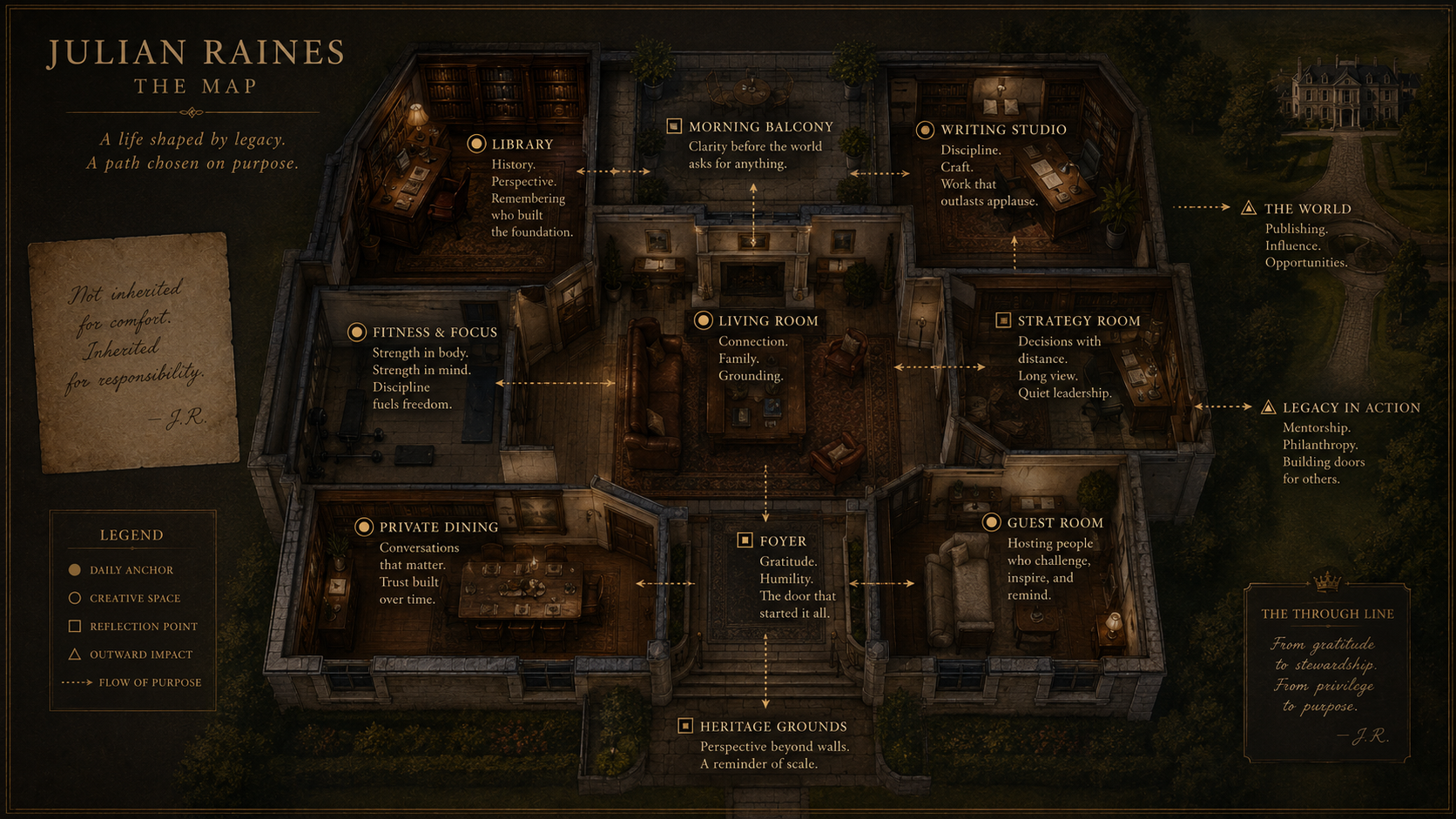
| Principle | Everett / Spencer | Julian |
|---|---|---|
| Access | Own the road | Keep the road usable |
| Wealth | Leverage | Responsibility |
| Publishing | Market control | Cultural stewardship |
| Authors | Assets to position | People with work |
I wanted to ask you to stay.
I did not, because too many people have confused wanting you with deserving your presence.
I would rather lose the moment than become another hand at the door.
| Moment | What He Could Have Done | What He Chose Instead |
|---|---|---|
| First award dinner | Followed her to the exit | Let the exit remain hers |
| Panel controversy | Publicly defended her | Sent a private note, then deleted it |
| Gala interruption | Claimed the conversation | Waited for another chance |
| Post-collapse era | Asked directly | Marked the page and waited too long |
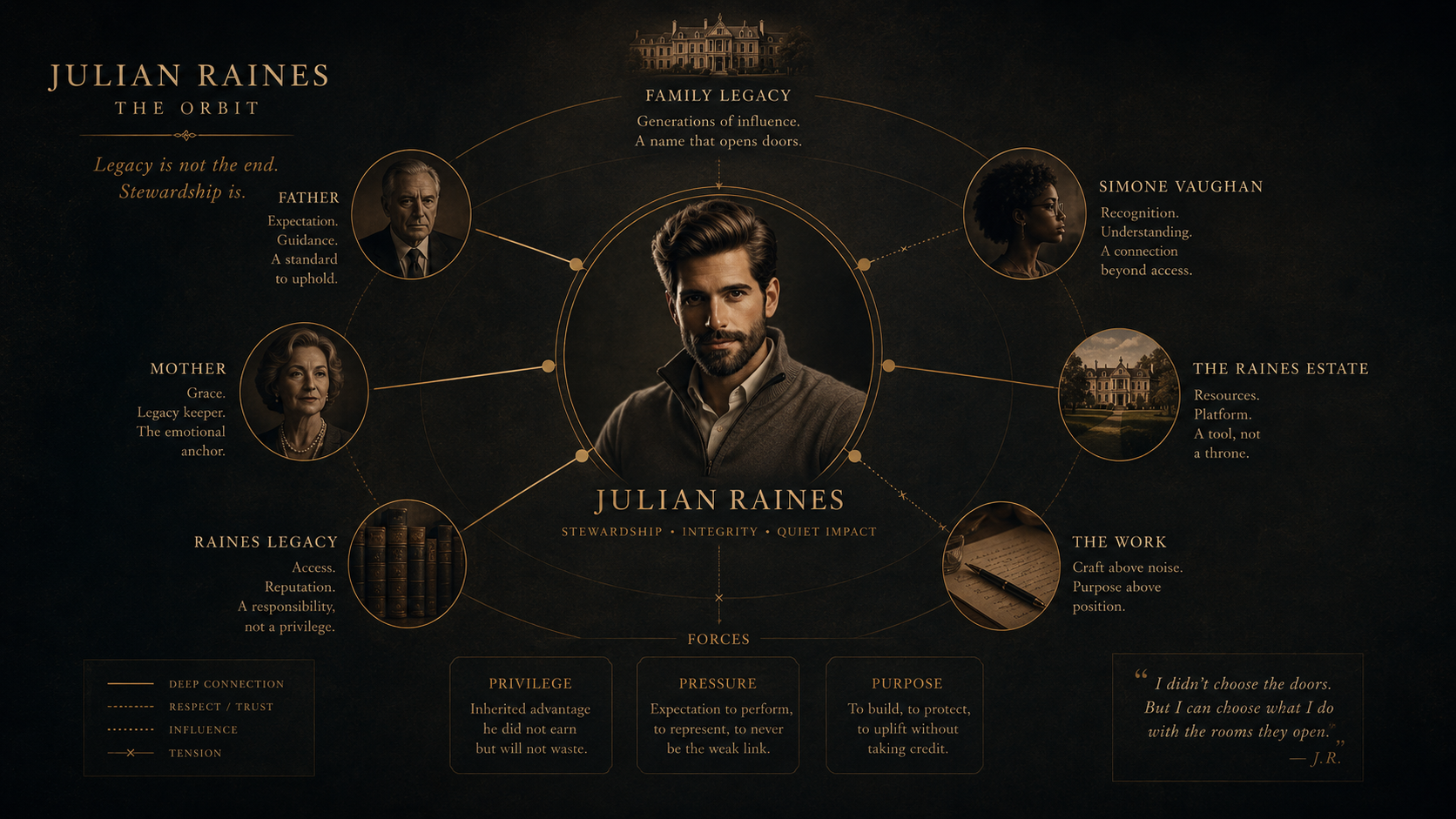
Julian’s name gives him access to rooms Elizabeth cannot enter, credibility J.R. has had to bargain for, family proximity Everett and Spencer distort, and a quiet view of Simone that no one else fully earns.
He enters the fold without taking the center. That restraint matters. It is also where his danger begins.
| Achievement | Merit | Access | Unknown |
|---|---|---|---|
| Bestseller debut | Readers stayed | Major placement | Would they have found it otherwise? |
| Critical praise | Strong prose | Critics expected importance | How much patience did the name buy? |
| International rights | Thematic strength | Family channels | Would risk have been taken? |
| Prize attention | Book quality | Visibility momentum | Did attention precede judgment? |
Letting the family name speak without correcting what it now implies. Believing decency is enough when indecent people hold the same keys. Assuming restraint always protects others.
That legacy naturally carries its original purpose forward. That talent and access can be cleanly separated. That quiet support is always more ethical than visible action.
That Everett and Spencer may become the public face of everything his ancestors meant to build. That privilege used gently can still preserve unfairness. That the only way to honor legacy may be to risk the comfort it gave him.
A cinematic teaser, archive-room sequence, narrated passage, family-ledger fragment, or Julian and Simone parallel-path montage.

A recovered fragment for readers entering Julian Raines’s quiet archive of legacy, access, and debt.
Julian Raines inherited rooms other writers had to fight to reach. His talent was real, but so was the machinery that opened before him.
This character novella follows privilege, restraint, family inheritance, literary stewardship, and the question of what ease owes once it finally tells the truth about itself.
Watch the novella promo, then receive the character gift and continue into Julian’s archive of open doors, marked pages, and inherited keys.
For readers who know an open door can still ask a difficult question.
