Core Fear
Becoming a bookstore that survives only by abandoning the books it was built to protect.
She built shelves by feeling because genre had failed too many people.
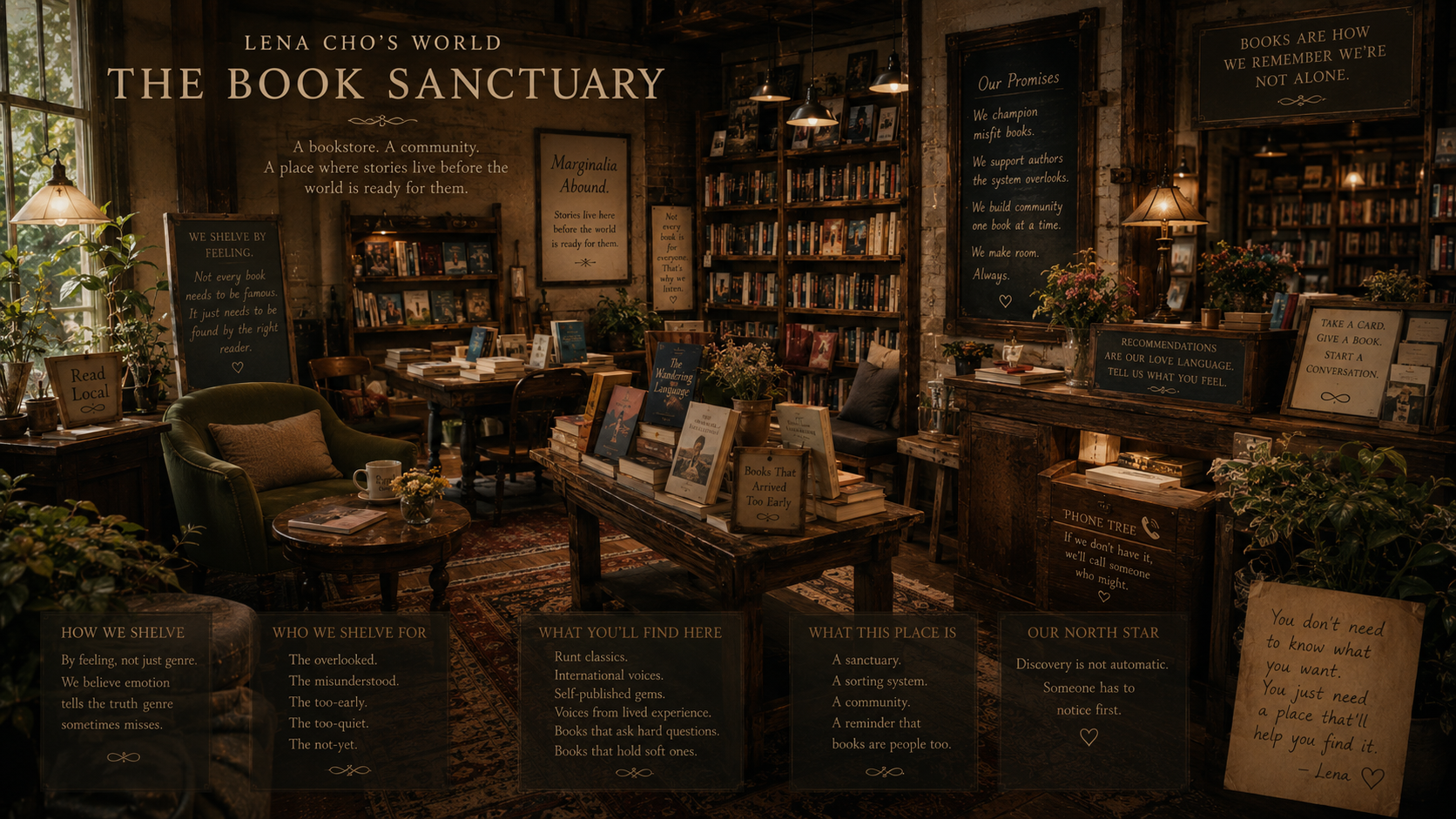
Lena Cho did not open Margins Abound to compete with the publishing industry. She opened it because she believed books disappeared when no human being decided to notice them.
So she made room. For the misfits. For the books that arrived too early. For the medically challenged writers who finished anyway. For the stories that crossed genres, languages, griefs, and continents.

A vertical introduction to Margins Abound: handwritten shelf cards, old bells over doors, stacks of uncategorizable books, a spreadsheet open beside tea gone cold, and a woman refusing to let overlooked stories vanish quietly.
Becoming a bookstore that survives only by abandoning the books it was built to protect.
Discovery is not automatic. Someone has to notice.
Shelf posture. Reader hesitation. Books almost purchased. Which stories readers are embarrassed to ask for directly.
“A shelf is not salvation. It is a beginning.”Shelf Fragment
“People do not walk into bookstores asking for genres. They walk in carrying feelings.”Sanctuary Fragment
“Tomorrow, the bell would ring again.”Margins Fragment
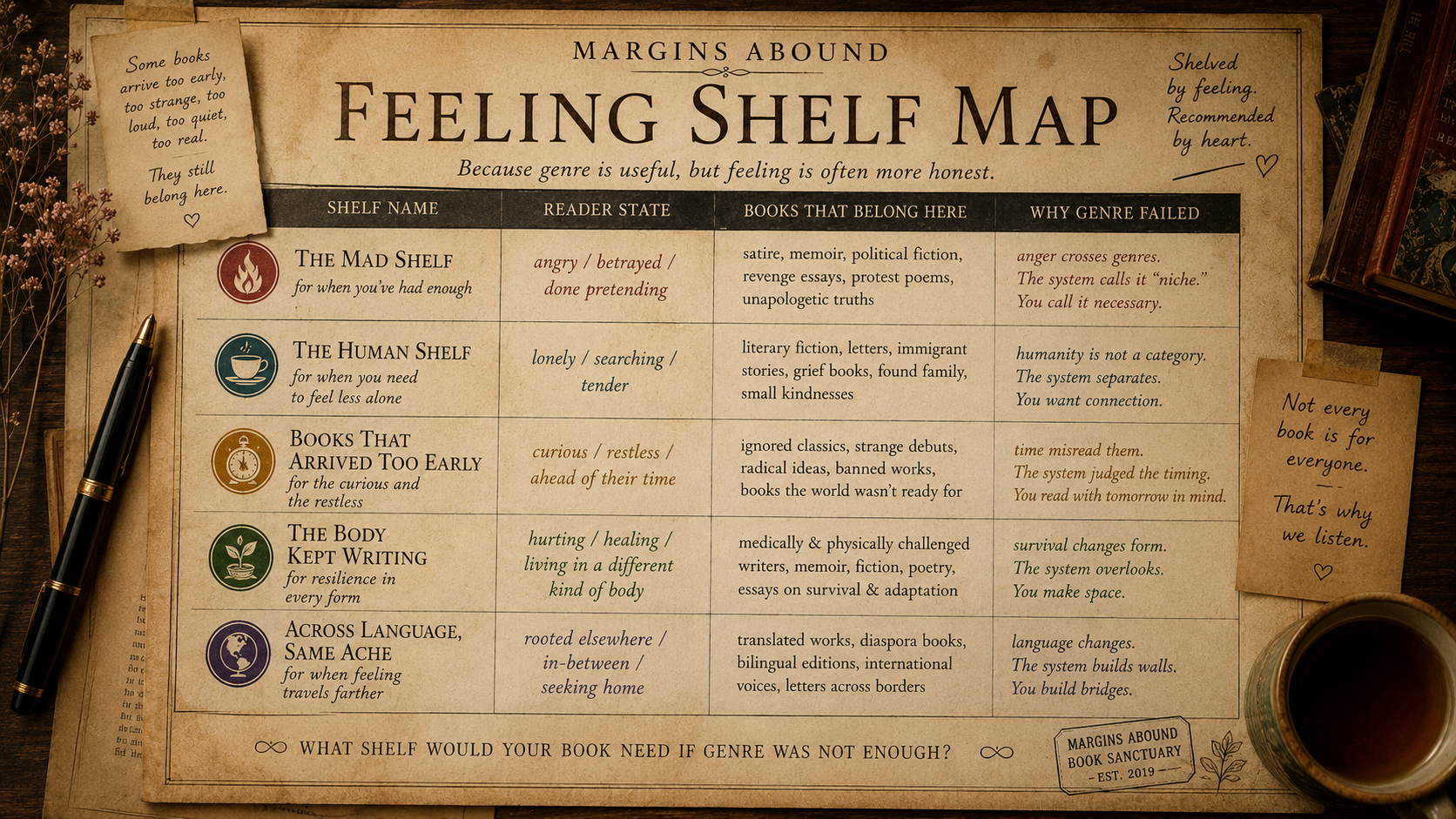
| Shelf Name | Reader State | Why Genre Failed |
|---|---|---|
| The Mad Shelf | Angry / betrayed / exhausted | Anger crosses genres. |
| The Human Shelf | Lonely / searching / tender | Humanity is not a category. |
| Books That Arrived Too Early | Restless / misunderstood | The present misread them. |
| The Body Kept Writing | Survival / endurance | Illness changes form. |
| Across Language, Same Ache | International / displaced | Feeling travels. |
Lena Cho does not trust discovery systems that cannot remember human feeling.
So she built another one: spreadsheets, handwritten notes, bookstore calls, librarians, translators, indie presses, hospital readers, night readers, grief readers, books that needed one more human recommendation before disappearing.
| Reader Asked | Lena Heard | Result |
|---|---|---|
| “Something angry but not hopeless.” | Grief with teeth. | Small-press essay collection found. |
| “Not romance, but I want to believe in people.” | Tenderness without formula. | Translated novella ordered. |
| “A fantasy that feels lost.” | Atmospheric / liminal. | Self-published title added to shelf. |
| “A book for my sister in treatment.” | Body / courage / no pity. | Memoir sourced through network. |
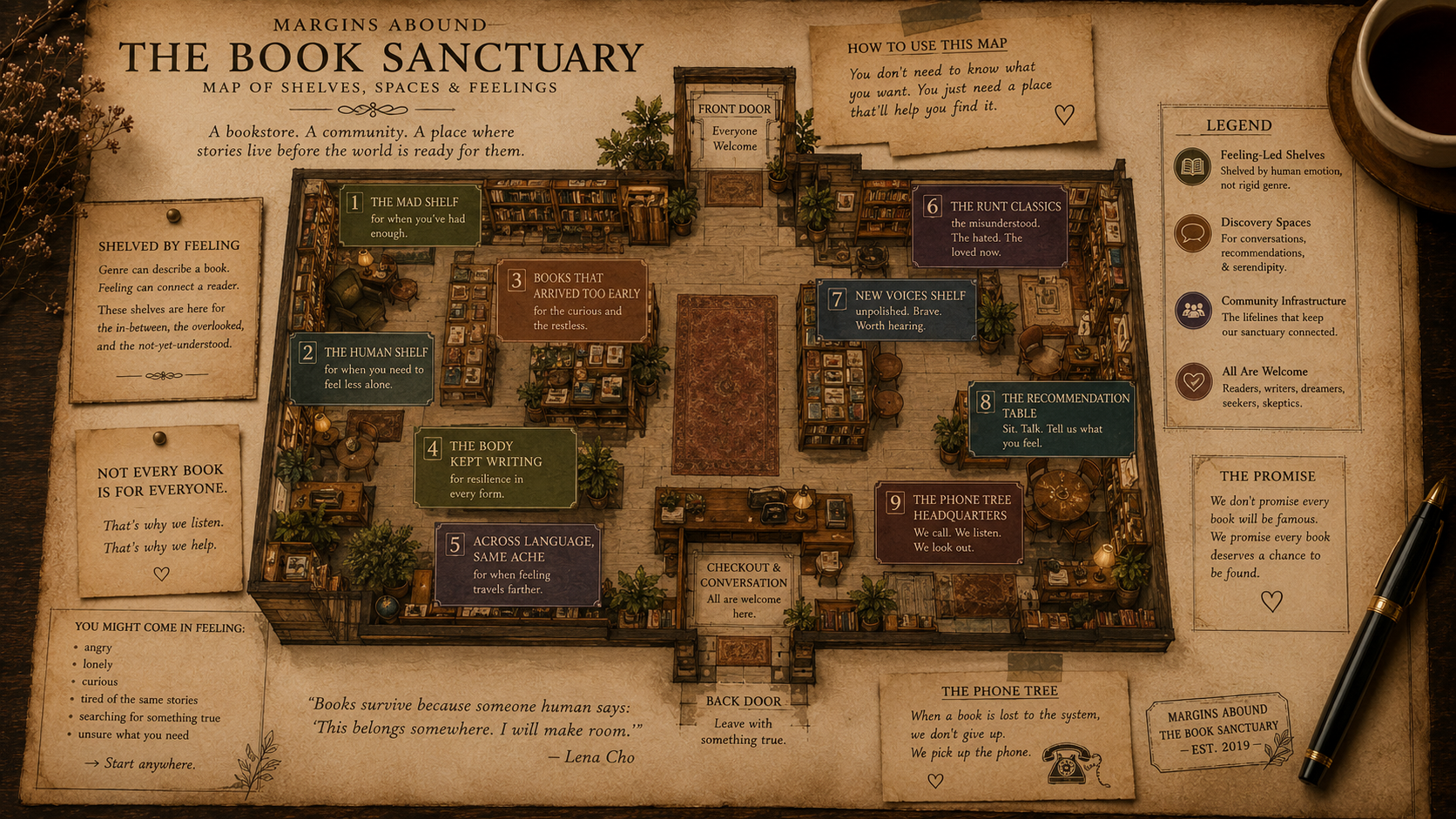
At Margins Abound, aisles are not only categories. They are emotional geographies.
The Human Shelf. The Mad Shelf. Beautiful Oddities. Books That Arrived Too Early. Across Language, Same Ache.
Readers come looking for books. They leave understanding themselves differently.
| Book | Why Lena Took It | What She Will Not Promise |
|---|---|---|
| Local memoir | Plainspoken grief. | No guarantee of sales. |
| Handmade poetry collection | Uneven but alive. | No review campaign. |
| Strange fantasy novella | The voice had weather in it. | No bestseller placement. |
| Medical memoir | The body kept writing. | No false hope. |
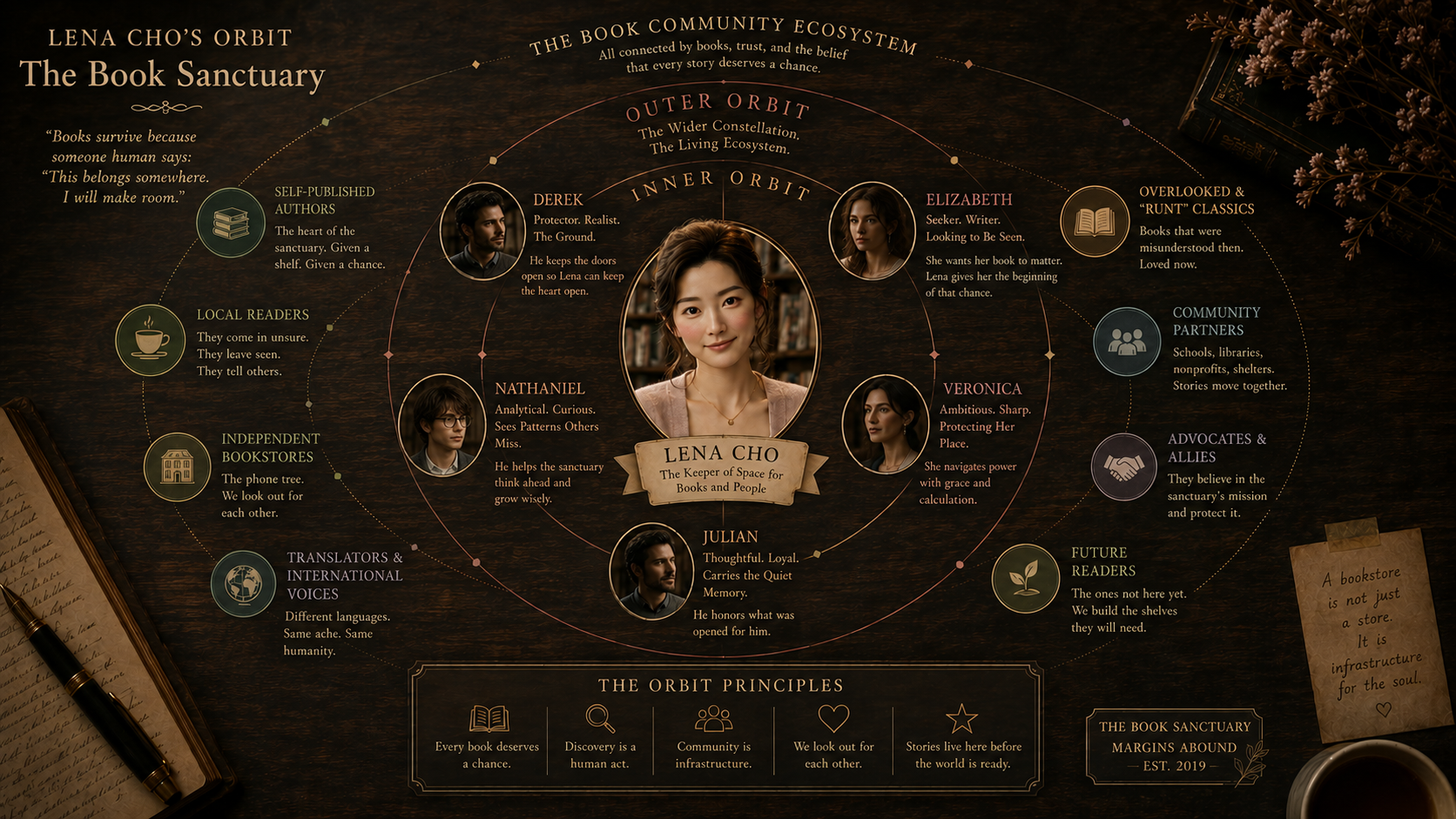
Lena Cho is one of the few people in The Rating Game world trying to build human infrastructure before the system becomes entirely algorithmic.
Elizabeth sees possibility in her shelves. Simone feels safe there. Julian understands what she is preserving. Veronica underestimates her until she realizes Margins Abound quietly influences discovery.
Believing care alone can keep the shelves alive. Letting every overlooked author become her emergency. Assuming discovery survives without structure.
That mainstream rejection always proves hidden genius. That kindness means unlimited access. That community happens automatically.
That books can disappear because no one made one phone call. That algorithms become the only discovery system because humans failed to organize care. That the sanctuary becomes a museum instead of a living bookstore.
Cinematic bookstore footage, archive-style shelf tours, handwritten recommendation cards, community-board fragments, and narrated passages about overlooked books finally finding readers.

A recovered fragment for readers wandering into Margins Abound, where shelves remember what algorithms forget.
Lena Cho built a bookstore around overlooked stories, emotional discovery, human recommendation, and the stubborn belief that books vanish when no one makes room for them.
This character novella follows sanctuary, stewardship, forgotten books, reader longing, and the quiet infrastructure of one honest shelf.
Watch the novella promo, then receive the character gift and continue into Lena’s sanctuary of feeling shelves, phone-tree readers, and books that nearly disappeared.
For readers who know the right shelf can feel like being found.
