Core Fear
A world where everything exists digitally, but nothing can be truly found, trusted, contextualized, or protected.
A library is not a room full of books. It is a public agreement about memory.
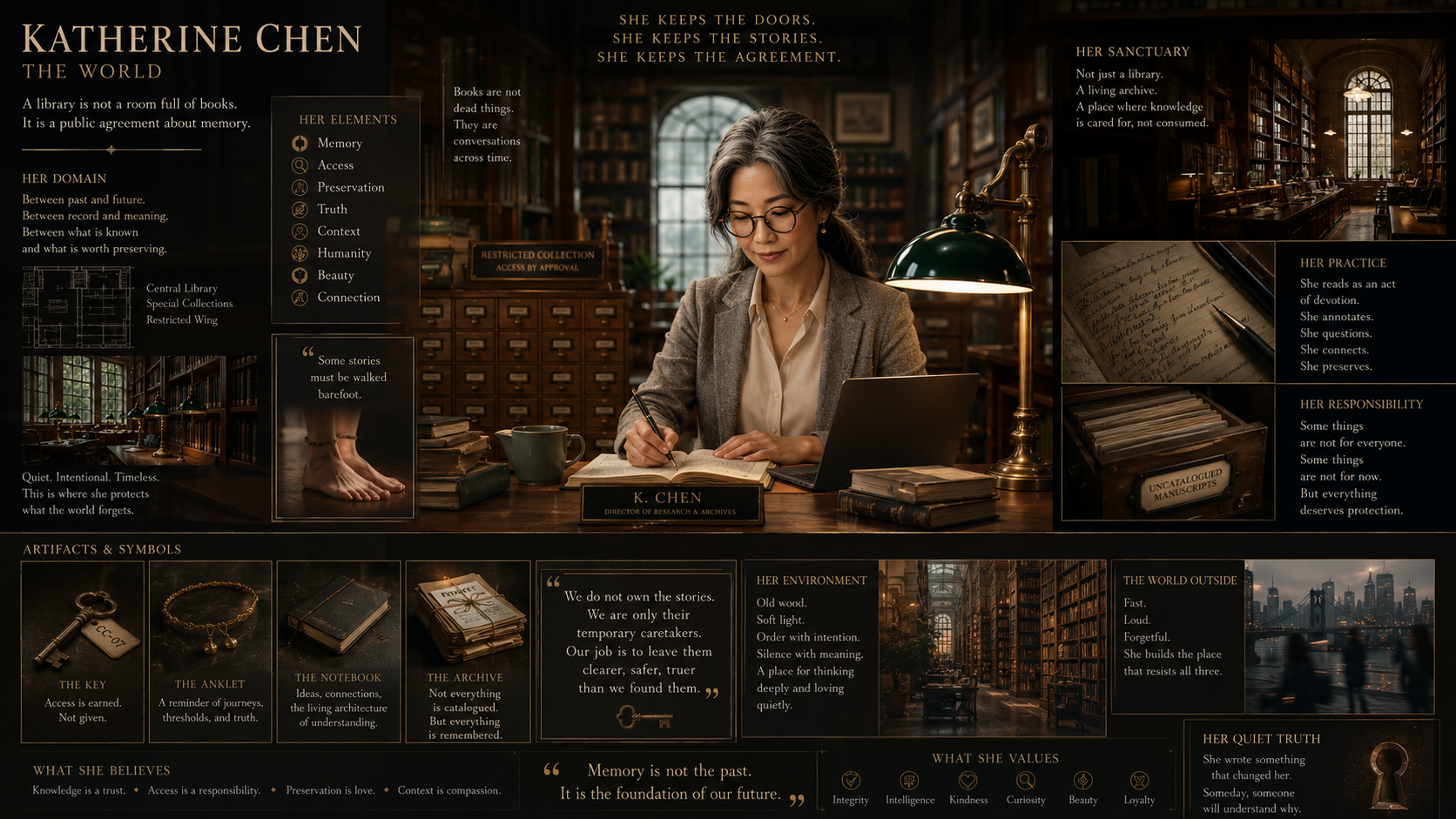
Katherine Chen is a librarian, researcher, archivist, cataloger, reader, and keeper of the door. She understands that books do not only need to be written. They need to be preserved, found, trusted, and carried forward.
In a literary world shaped by algorithms, ownership, visibility, and erasure, Katherine knows the most dangerous disappearance is the one no one notices until the shelf is already empty.

A vertical introduction to Katherine’s world: library green, warm reading lamps, card catalog drawers, digital archive screens, romance paperbacks tucked beside research folders, and a woman who knows exactly what disappears first.
A world where everything exists digitally, but nothing can be truly found, trusted, contextualized, or protected.
Cataloging is moral work. Access is sacred. Preservation is not passive.
Metadata errors, licensing traps, disappearing archives, reader privacy, banned books, search failures, and hidden pathways to knowledge.

“The writer creates the book. The librarian decides whether the future can still find it.”Access Fragment
“Libraries were not quiet. They were restrained.”Institution Fragment
“Someone had to defend the door.”Preservation Fragment
| Threat | Public Assumption | Katherine’s Read |
|---|---|---|
| Digital migration | Easier access | New gatekeepers. |
| Algorithmic search | Faster discovery | Narrowed pathways. |
| Platform licensing | Convenience | Rented memory. |
| Budget cuts | Efficiency | Civic erosion. |
| Book removals | Local politics | Historical amputation. |
The right to find what exists.
The record that prevents disappearance.
The difference between information and understanding.
The books people love without explanation.
Katherine does not fear technology. She fears systems that confuse storage with preservation, search with discovery, and availability with public trust.
If everything is online, someone still decides what is indexed, licensed, searchable, summarized, buried, removed, or made too expensive to reach.
| Promise | Hidden Problem | Warning |
|---|---|---|
| Everything available | Nothing findable | Access without guidance becomes maze-building. |
| Search replaces shelves | Search favors what is indexed well | Unseen works vanish twice. |
| AI summaries save time | Context collapses | Compression can replace memory. |
| Licensing saves space | Access becomes temporary | Rented memory is not preservation. |
| Trope / Feeling | Young Katherine Felt | Older Katherine Understands |
|---|---|---|
| Slow burn | Anticipation | Restraint has architecture. |
| Rivals to lovers | Spark | Conflict can become recognition. |
| Secret letters | Wonder | Privacy intensifies truth. |
| Second chance | Ache | Time is not always closure. |
| Person | Holds | Katherine’s Read |
|---|---|---|
| Lena Cho | Sanctuary / human recommendation | Care needs structure. |
| Derek Sloan | Operations / survival | Numbers are preservation work. |
| Clint Burnett | Editorial judgment | Expertise needs a new vessel. |
| Nate Mercer | Ethical systems | Technology needs governance. |
| Elizabeth Harper | Witness / grit | Lived harm must be documented. |
| Katherine Chen | Access / memory / preservation | Libraries are the public spine. |
Katherine does not see Clint as obsolete. She sees expertise under pressure.
He protects the sentence. She protects the path to the sentence. Between them, books become more than content, more than product, more than searchable text.
| Subject | Clint’s Position | Katherine’s Response |
|---|---|---|
| AI editing | “It cannot hear the sentence.” | “It also cannot know where the sentence belongs.” |
| Libraries | “Last place readers still ask humans.” | “And the first place they should.” |
| Independent bookstores | “Lena needs more than goodwill.” | “Then we map the network.” |
| Retirement | “Maybe it is time.” | “Or maybe your work needs a new shelf.” |
| Topic | Why It Matters | Warning Sign |
|---|---|---|
| Digital lending rights | Access depends on licensing | Books vanish by contract. |
| Reviewer ecosystems | Early visibility power | Hype can mimic consensus. |
| Library metadata | Findability | Bad tags bury books. |
| Platform discovery | Public reading paths | Private companies shape attention. |
| AI summaries | Reading substitution | Context replaced by compression. |
Some records are not lost. They are waiting for the right reader to notice the pattern.
| Archive ID | Attribution | Status | Preservation Notes |
|---|---|---|---|
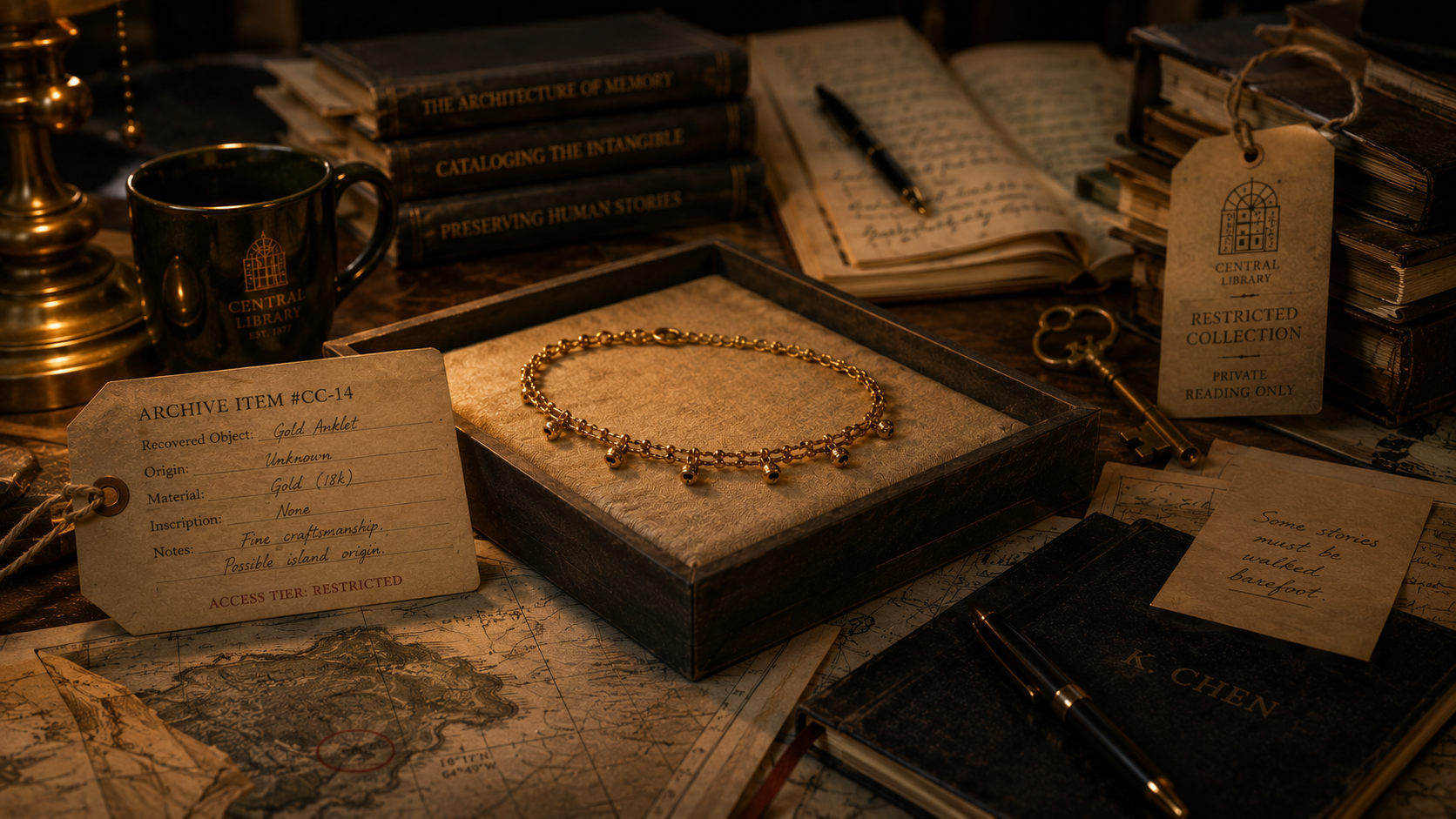
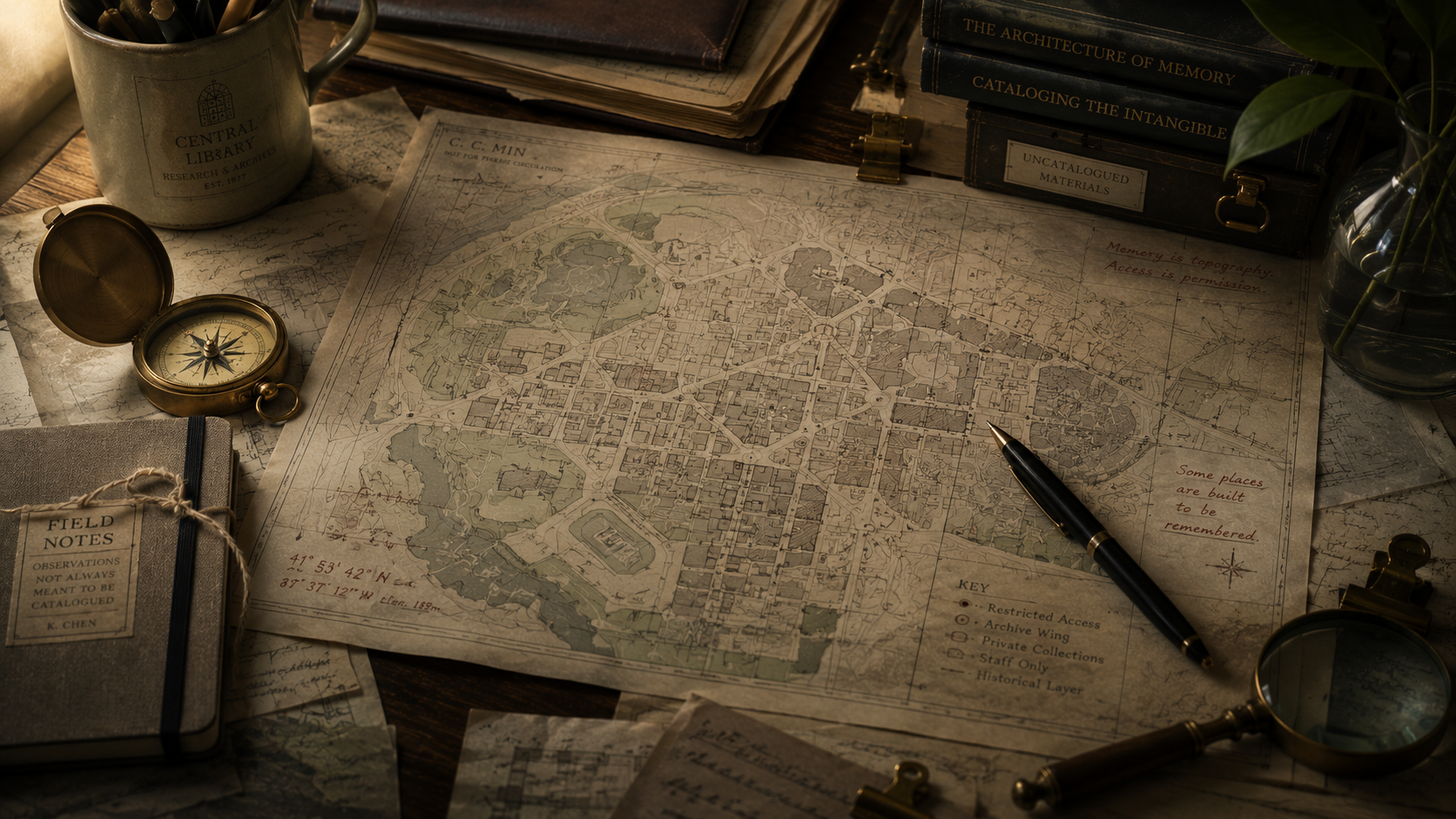
| CC-MIN-14 | Disputed | Restricted circulation | Island references. Barefoot imagery. Gold object. Emotional restoration motifs. |
Katherine raises the stakes of The Rating Game from book sales to cultural memory. She understands that bookstores, editors, ethical technologists, authors, researchers, and readers all depend on one question:
Will the future still be able to find what mattered?
Katherine’s role is not decorative. She is the person who understands that visibility without access is temporary, access without preservation is fragile, and preservation without human stewardship becomes storage.
She does not merely guard the archive. She understands why the archive must remain findable.
Assuming libraries survive because people love the idea of them. Treating digital access as automatic progress. Letting librarians remain invisible until crisis.
That information abundance protects knowledge. That private platforms will preserve what does not profit them. That pleasure reading is separate from cultural memory.
That libraries could become symbolic while losing real power. That future readers might inherit access only through corporate permission. That the last door could close quietly because everyone assumed someone else was holding it open.
A cinematic archive fragment about library-lamp scenes, card catalog close-ups, digital preservation overlays, romance-stack fragments, and access as sacred work.
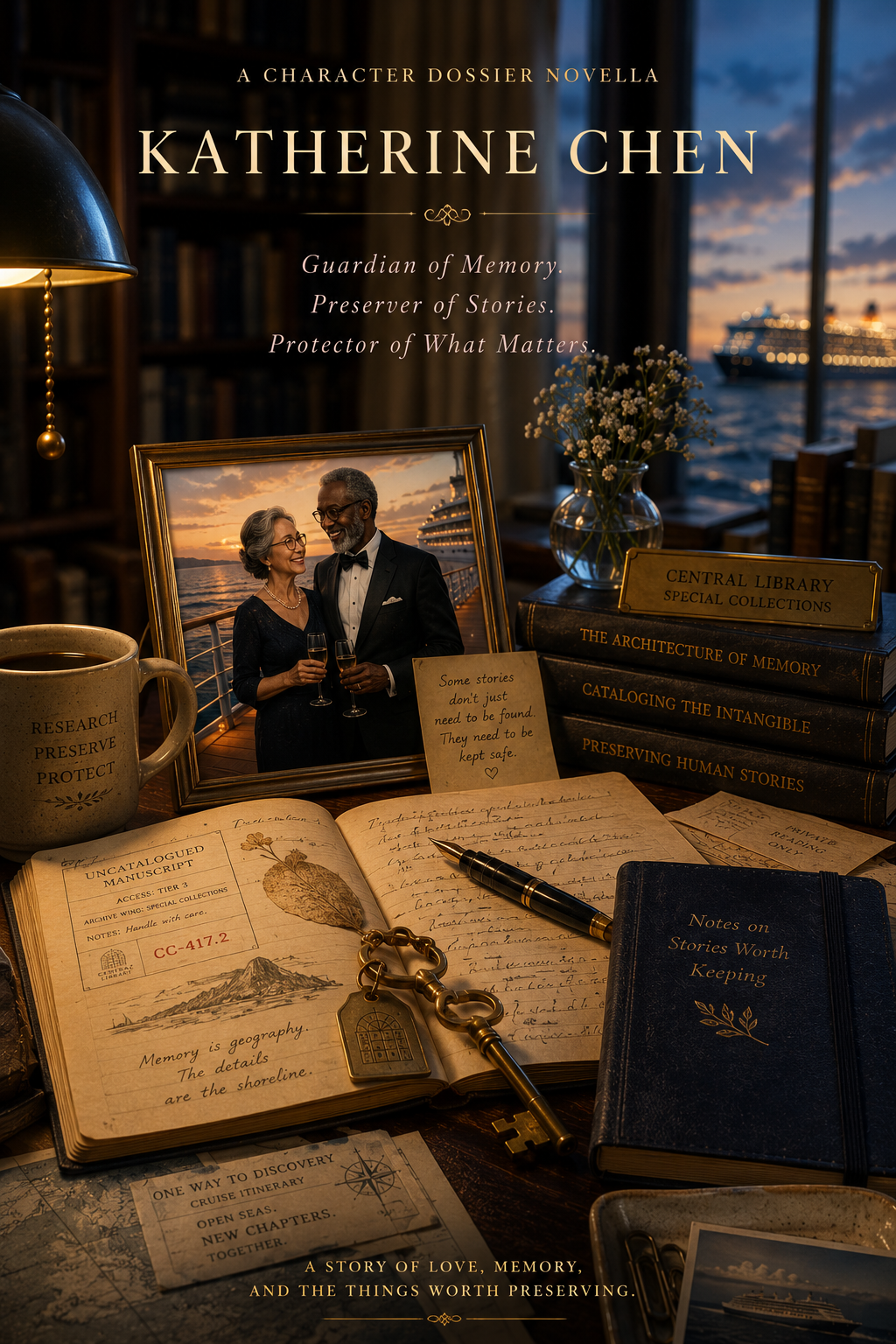
A recovered fragment for readers entering Katherine Chen’s archive of memory, access, and preservation.
Katherine understands that the future does not inherit books automatically. Someone has to keep the record intact. Someone has to keep the door open.
This character novella follows libraries, memory, romance, research, public access, private reading, and the woman who understood what disappears first.
Watch the novella promo, then receive the character gift and continue into Katherine’s archive: the keys, catalogs, preservation notes, research dossiers, restricted manuscript clues, and the public memory she refuses to abandon.
For readers who want to step past the reading room and into the archive beneath it.
